

LumaSafe
An end-to-end mobile app designed to empower women to stay active and confident in their fitness journey while prioritizing safety and peace of mind
Tasks:
- User Experience Design, User Interface Design, and Brand Design
Tools:
- Adobe Illustrator, Adobe Photoshop, and Figma
Duration:
- 4 weeks
Behind the LumaSafe Brand
Overview
Problem
Interview and Research Findings
Understanding the Users
Women want to stay active and prioritize their health—whether it’s walking, running, or biking—but safety concerns often stand in the way. When exercising alone, especially after dark or during low-light hours, many face an increased risk of harassment or attack. As a result, fear can override their desire to stay fit, leading them to avoid outdoor activities and compromise their well-being.
Research shows that safety concerns significantly impact women’s fitness routines. After experiencing harassment, over 80% of women report altering their running habits—whether by changing routes or times, running less frequently, or avoiding solo runs altogether—and about 20% stop running alone entirely. Nearly 67% identify walking alone at night as their top safety fear, and 38% take daily precautions, such as checking in with someone, to feel secure. Women are also far more likely than men to experience harassment and unwanted attention, leading to lasting changes in their behavior. These insights reveal a clear gap in the market for digital solutions that support active women by seamlessly integrating fitness tracking with AI-powered safety tools and services.
Low & Mid Fidelity Wireframes
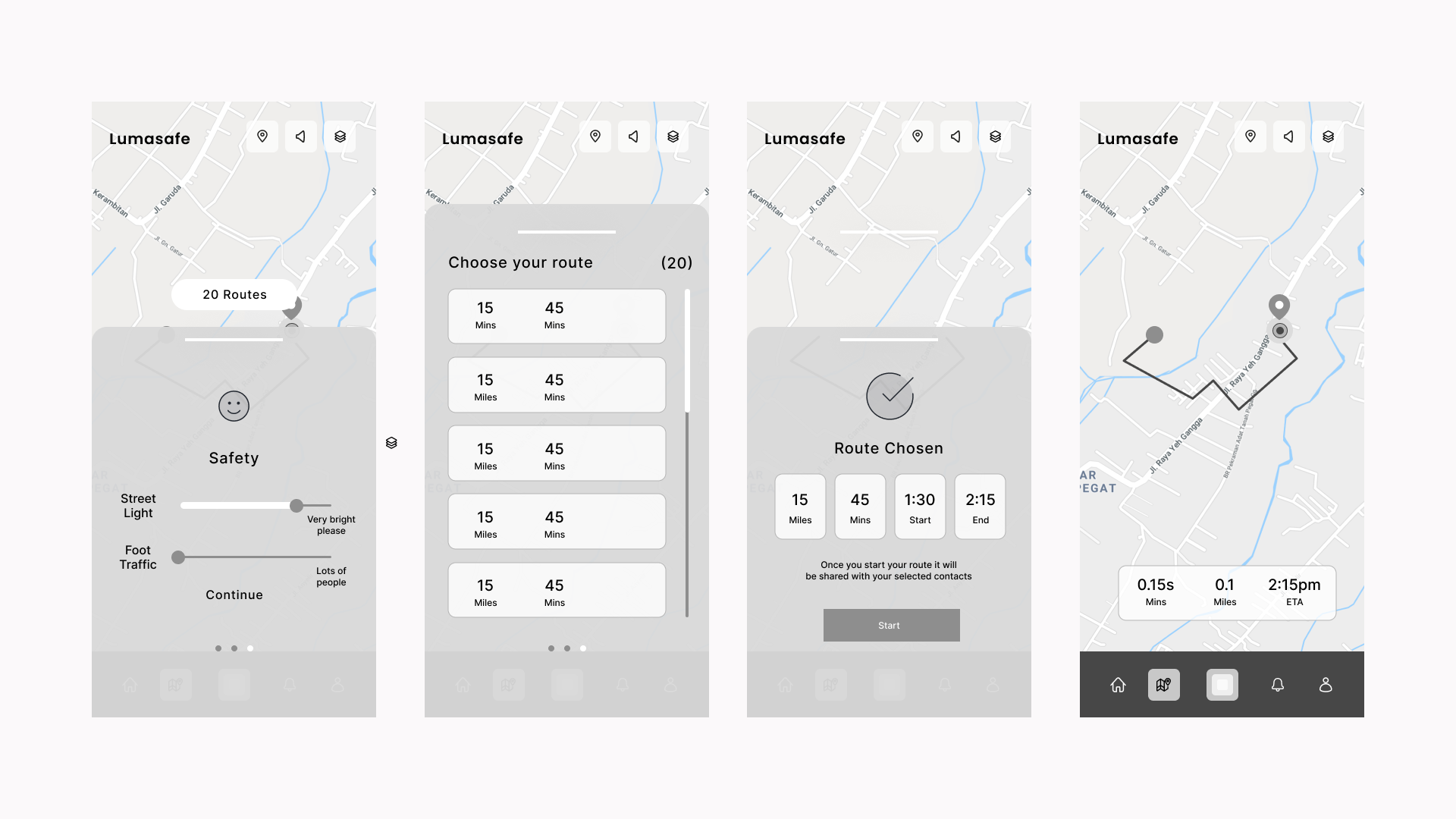
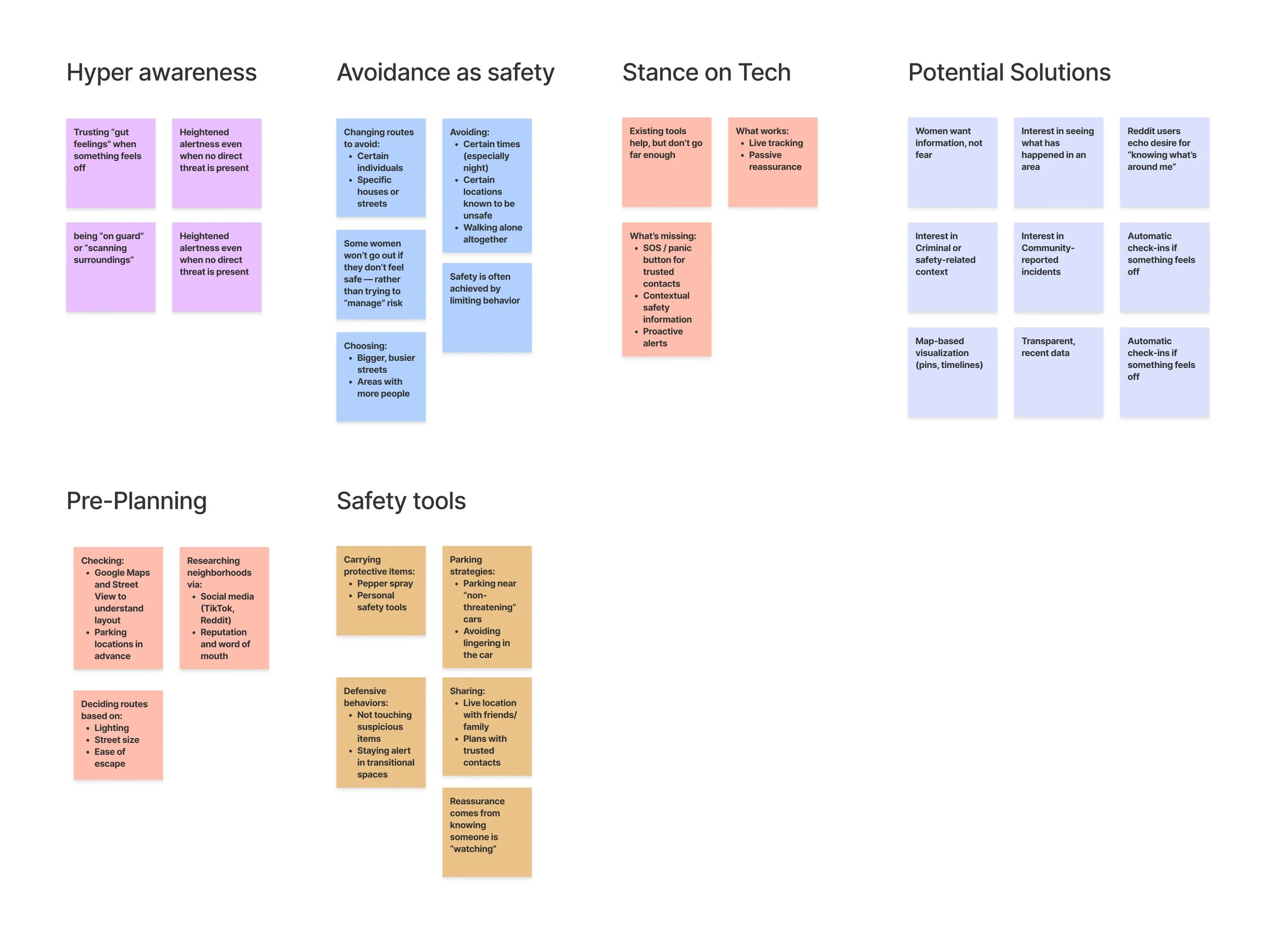
Through in-depth interviews and secondary research, clear patterns emerged around how safety concerns shape women’s fitness behaviors and daily decision-making.
Research Methods:
User Interviews
Secondary Online Research
Safety Is Highly Contextual
Women feel safest in familiar, well-lit areas during the day, while unfamiliar or isolated spaces at night increase anxiety. About 66% report feeling unsafe walking alone after dark, limiting their fitness and independence.
Hyper-Awareness & Avoidance
Women often feel “always on alert” when alone, adjusting routes, avoiding certain areas, and limiting activities after dark. These precautions frequently lead to altered routines or avoiding solo activity altogether.
Risk Management
Women proactively manage safety by carrying tools, sharing location, researching areas, and trusting their intuition. However, these strategies are often manual, reactive, and spread across multiple disconnected tools.
Gaps in Digital Solutions
Existing apps lack real-time, proactive safety features and integration with fitness tracking. Participants want map-based insights, smart route suggestions, customizable check-ins, emergency alerts, and strong privacy protections.
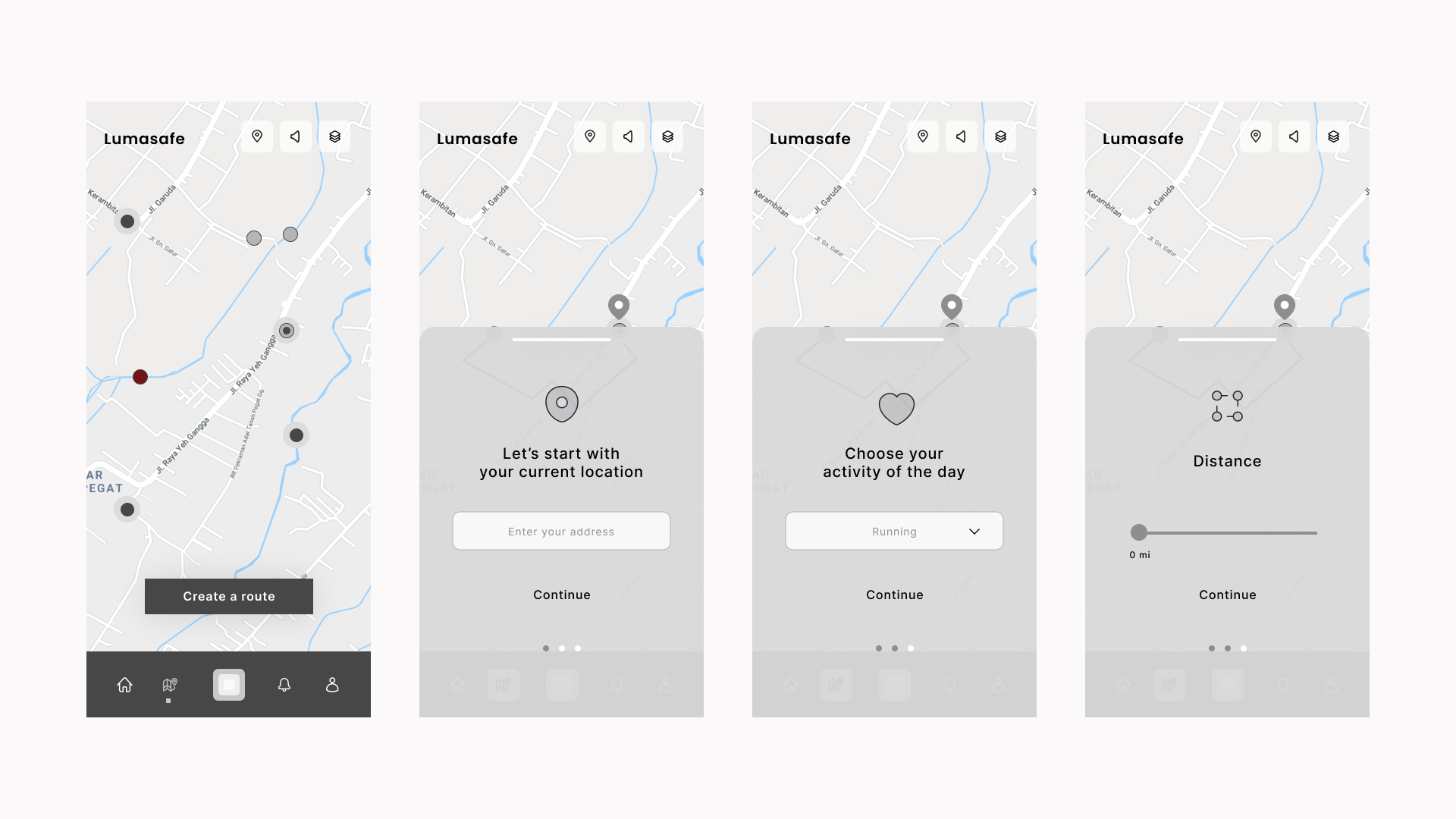
Based on insights from user interviews and secondary research, I developed low- and mid-fidelity wireframes to visualize the app’s layout and begin designing a user experience that aligns with UX best practices.
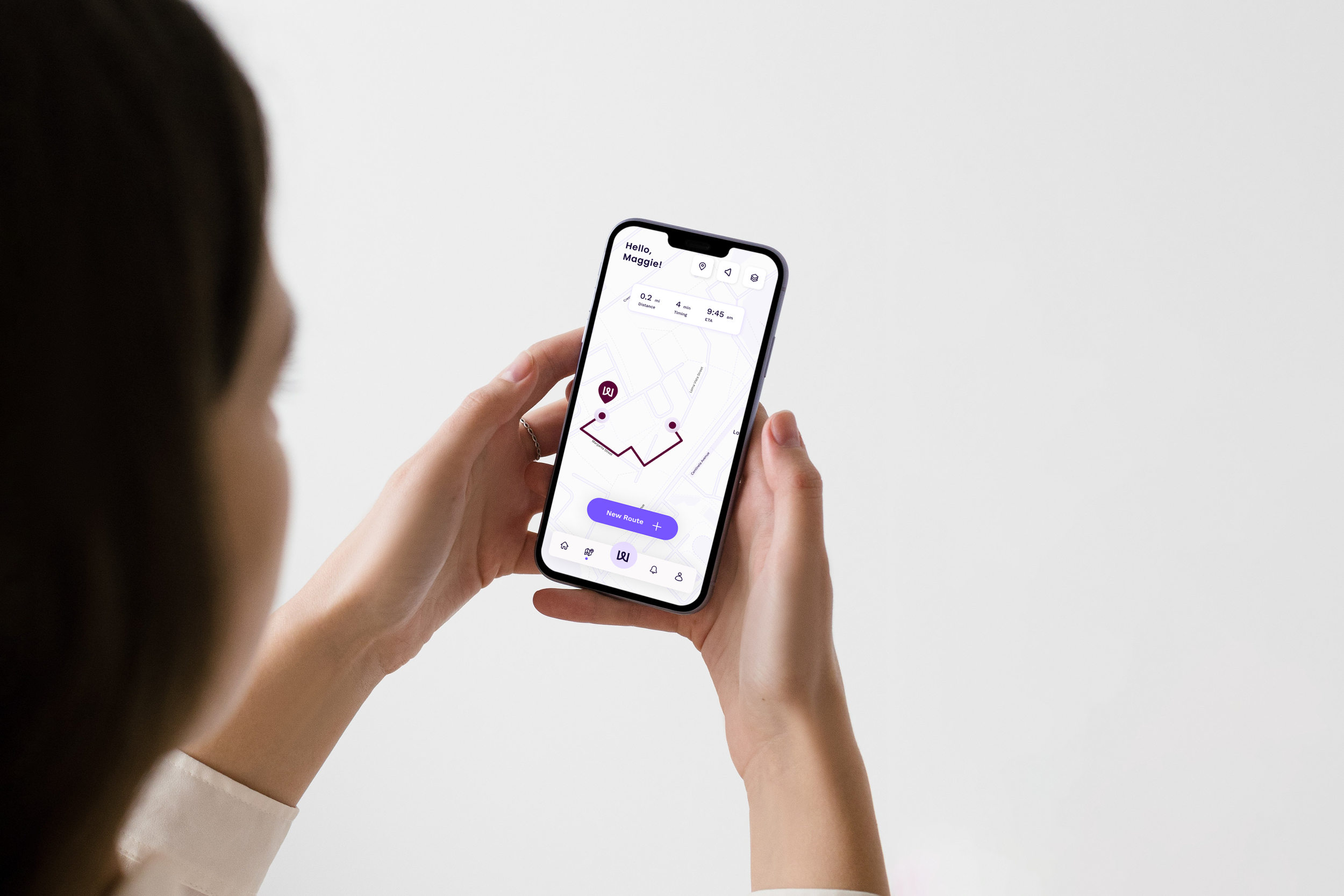
LumaSafe is an AI-powered app that helps women stay active and safe. It creates custom routes, shows nearby users, and provides real-time safety insights. Users can share their route with emergency contacts, receive alerts if something goes wrong, and join or host outings to build a supportive community—empowering women to move confidently and securely.
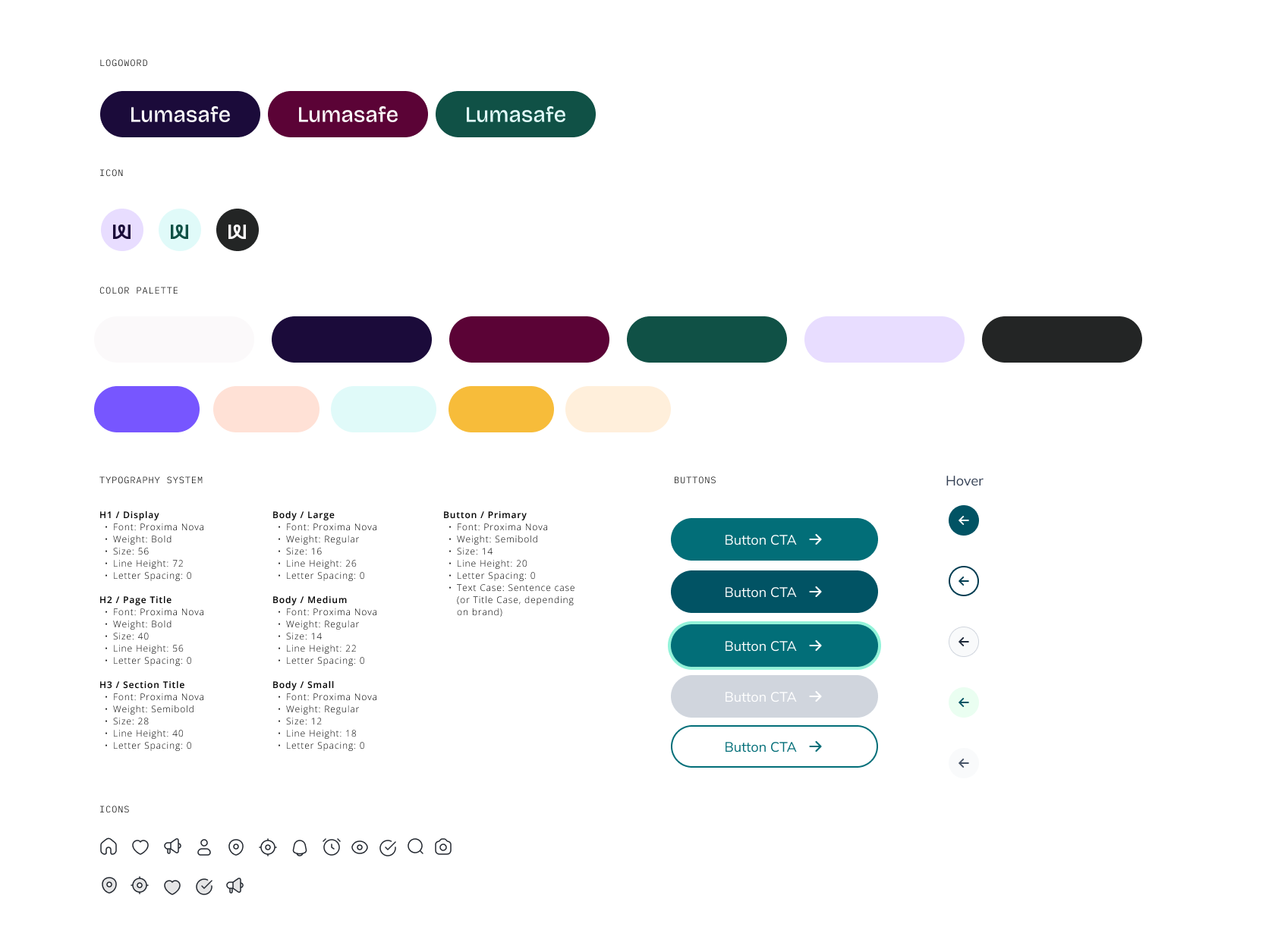
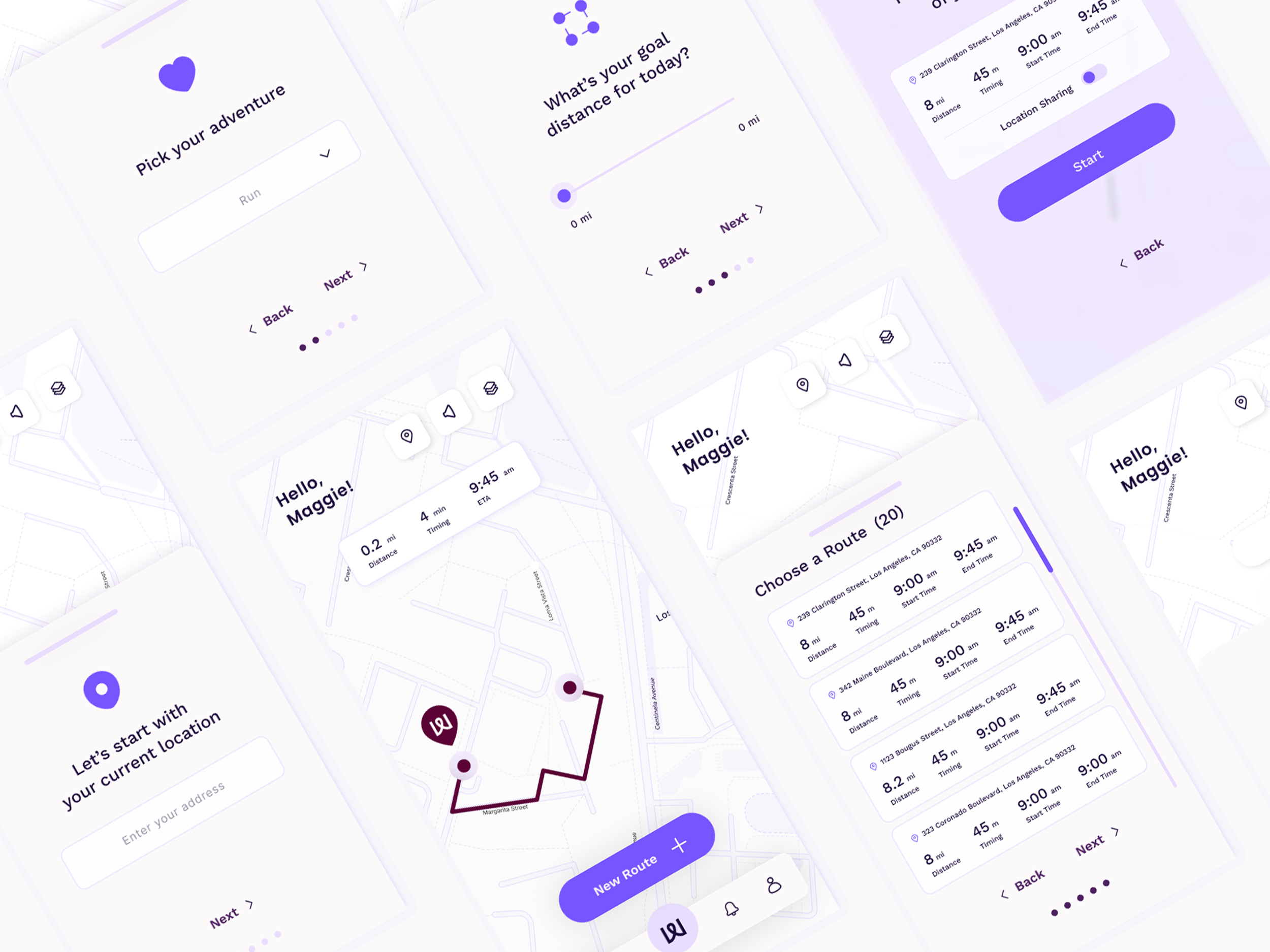
Building on the insights from low-fidelity usability testing and the established brand system, we enhanced the wireframes by improving both their visual design and functionality.
High-Fidelity Wireframes
Actionable Revisions
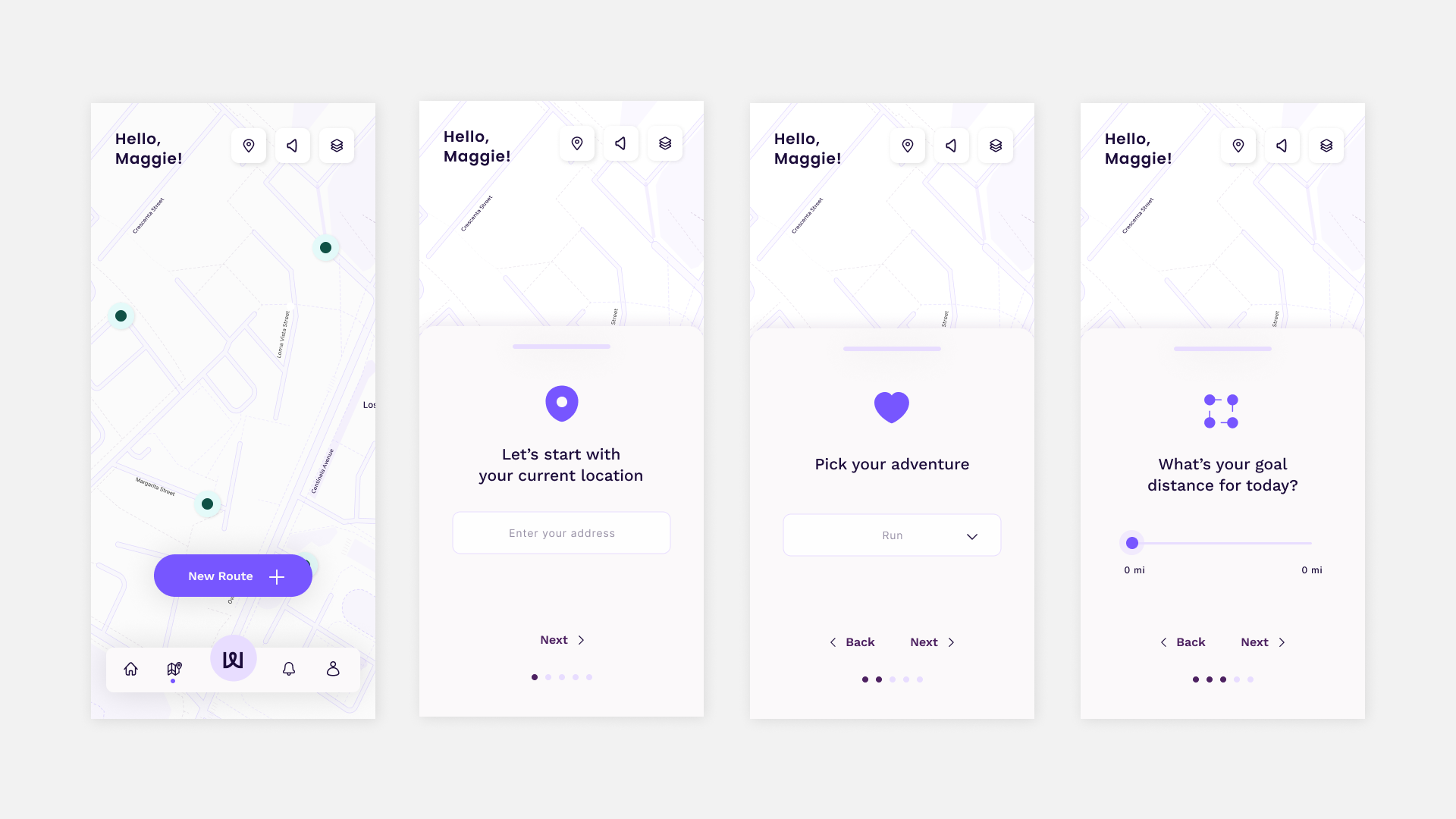
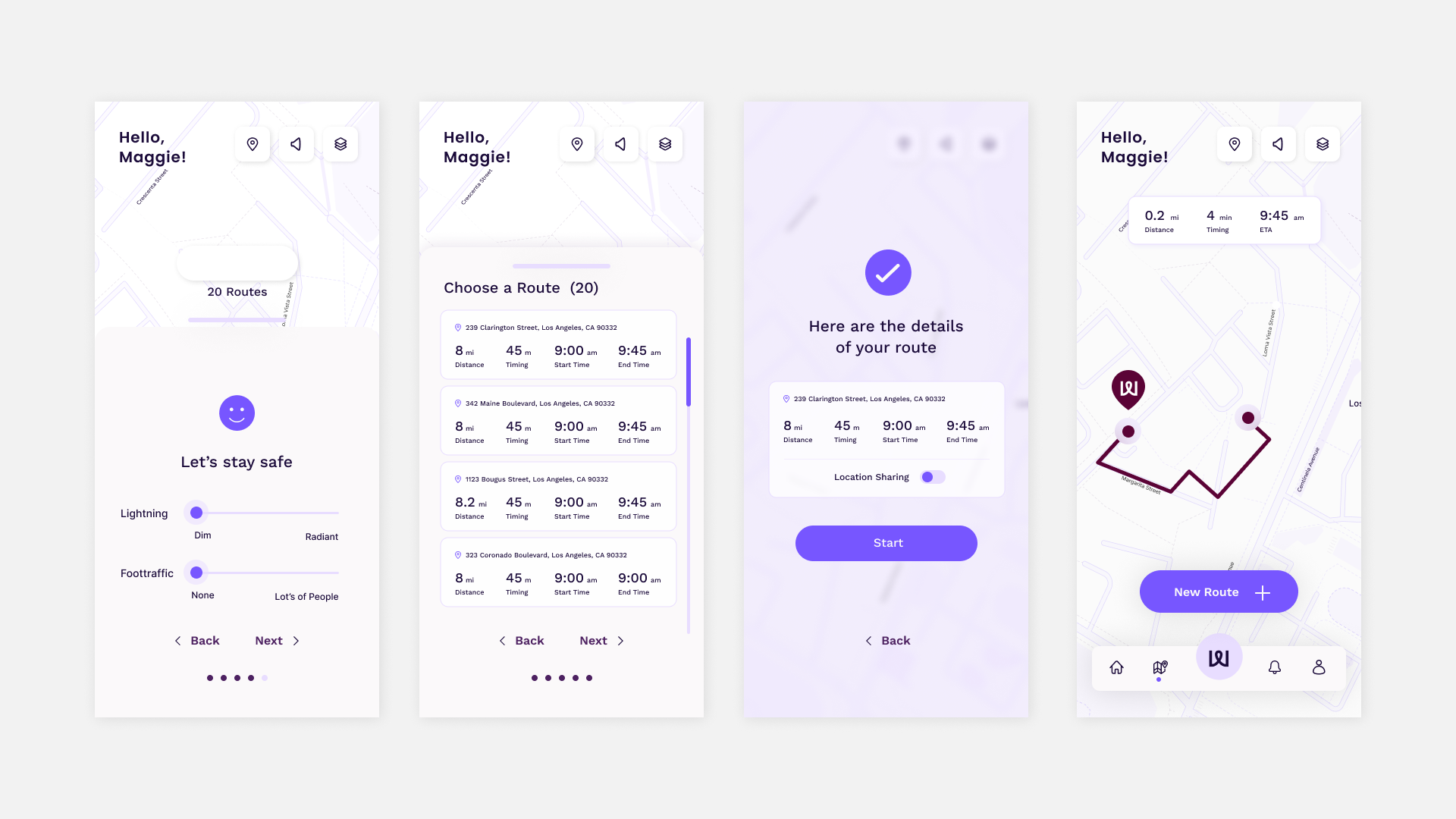
Enhance menu labels and icon clarity — add text labels for primary flows.
Simplify task flow with step progression indicators.
Add contextual help for AI parameter options to prevent misselection.
Improve screen feedback after selections (e.g., confirmation banners or highlights).
Consider optional advanced settings for experienced users.
Project Takeaways
Through this project, I learned how safety concerns shape women’s outdoor activity and how to translate those insights into a seamless, empowering app experience. Conducting interviews and research reinforced the importance of understanding user context, behaviors, and unmet needs. Designing and testing low- to high-fidelity prototypes taught me to balance clarity, usability, and detail—especially when creating complex flows like route planning. Overall, I gained valuable experience applying UX principles end-to-end, turning real user challenges into an intuitive, confidence-boosting solution.